Betrayal Trauma: What It Is, How It Feels, and How Partners Heal
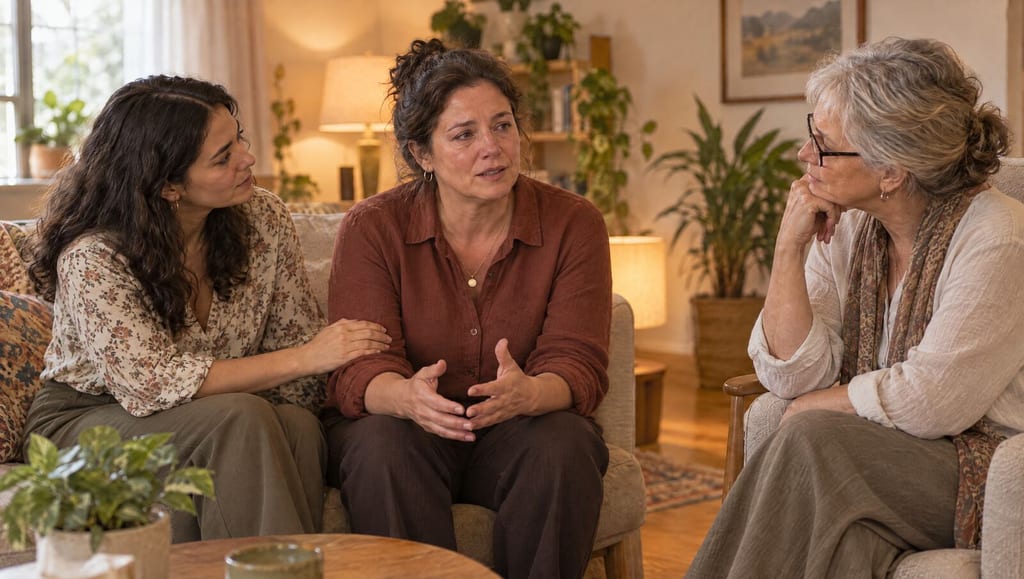
Betrayal trauma is the trauma that follows when someone you depend on for emotional or physical survival, such as a spouse, breaks that trust in a critical way. For partners who discover a spouse’s hidden sexual behavior, the pain is real trauma, not an overreaction. With the right support, betrayed partners can and do heal.
If you just found out, start with the first steps, or find a meeting today. You do not have to carry this alone.
What Is Betrayal Trauma?
Dr. Jill Manning, a clinician who serves on S.A. Lifeline’s advisory board, explains that betrayal trauma occurs “when someone who is depended upon for emotional or physical survival, such as a spouse, breaks that trust in a critical way.” When a wife or husband discovers hidden sexual behavior and the deception that kept it hidden, that is exactly what has happened.
The idea has roots in research. As Michelle Mays explains in her conversation on the Pathway to Recovery podcast, the psychologist Jennifer Freyd is “the founder of betrayal trauma theory.” Dr. Stefanie Carnes, in her S.A. Lifeline conference talk, describes how the concept was first studied in child abuse and later widened to include the impact of infidelity and sex addiction on partners.
What sets betrayal trauma apart is the relationship itself. Dr. Barbara Steffens says it happens “within the context of a relationship where there’s an expectation or a necessity for dependence or interdependence.” In her S.A. Lifeline interview, she puts it simply: “the nature of the relationship is what makes it betrayal trauma.” The person who was supposed to be your safe place is the person who hurt you.
For many years, betrayed partners were labeled co-addicted or codependent. Steffens’ research helped change that. In her words, “I helped us understand this was trauma, not that they had their own addiction.” Carnes describes the same shift, away from labeling partners as codependent and toward recognizing their trauma responses as legitimate and serious. If you are a betrayed partner, your reactions are a response to an injury. They are not a flaw in you.
Symptoms and Signs of Betrayal Trauma
Betrayal trauma affects the mind, the body, and the way you move through daily life. In her doctoral research, Dr. Barbara Steffens found that “69.1% met all the criteria for post-traumatic stress,” and she notes that later studies by other researchers found similar rates. S.A. Lifeline sees the same pattern in its work with families: many betrayed spouses “experience symptoms associated with post-traumatic stress disorder (PTSD),” as described on our Circle Models page.
Signs these experts describe include:
- Hypervigilance. Dr. Jill Manning notes that “hypervigilance and policing behaviors become common as women try to uncover the truth and protect themselves.” You may find yourself checking phones, devices, and accounts again and again.
- Intrusive thoughts and nightmares. Dr. Stefanie Carnes lists intrusive thinking, nightmares, and difficulty concentrating among the symptoms that make daily life hard.
- Intense emotions. Carnes also describes emotional instability, and Manning notes that intense emotions and difficulty regulating them are common.
- Anger. Dr. Kevin Skinner says that, according to the research, one of the most common outcomes is “I’m angrier than I’ve ever been.” In his conversation on communication after betrayal, he explains that this anger grows out of fear and pain. It does not mean you are an angry person.
- Damaged self-esteem. Carnes names damaged self-esteem among the common effects.
- Physical effects. Manning describes “weight fluctuation, sleep disturbances, and changes in appetite and libido.” Carnes adds headaches, gastrointestinal issues, and autoimmune disorders. Kristin Snowden has seen immune problems, digestive problems, and migraines in partners whose nervous systems have been under constant strain.
- Losing track of basic needs. Jeni Brockbank, speaking on the S.A. Lifeline podcast from her own experience as a betrayed spouse, describes women who are not sleeping and who forget to eat.
None of this means you are weak. As Carnes puts it, “these symptoms are normal responses to trauma and should be approached with compassion,” not treated as proof that something is wrong with you.
Why It Feels Like Trauma, Not Just Heartbreak
Many partners ask why they cannot just move on. The experts S.A. Lifeline has hosted give several answers.
Your body reads betrayal as danger
KayLee Dunn explains in her episode on the nervous system that “when we experience betrayal, we experience that as a primal-level threat.” The fight, flight, freeze, fawn, and flop responses that follow are automatic. “Those responses aren’t things we choose,” she says. Your “response to the betrayal itself is not pathological or messed up or crazy.” Kristin Snowden describes betrayal trauma as “the traumatic wiring that occurs in your brain,” and Dr. Jake Porter is direct: “It’s a real injury to the brain.”
The uncertainty keeps going
Many partners are not looking back at a single painful event. The truth often comes out in pieces over weeks or months. Snowden calls this “trickle truths” and describes the result as “this constantly traumatic, uncertain, unpredictable state that these betrayed partners live in.” Each new piece of information can reopen the wound.
Gaslighting makes you doubt yourself
Dr. Jill Manning explains that “gaslighting is often used to keep the partner from discovering the full extent of the addictive behavior.” Michelle Mays describes four types of gaslighting: lying, reality manipulation, scapegoating, and coercion. Reality manipulation does special harm, she says, because “our ability to perceive our reality accurately is the basis of our mental health.” She considers it a form of emotional abuse.
You may have gone “blind” to protect the relationship
Many partners blame themselves for not seeing the signs. Mays explains a pattern called betrayal blindness: “in our adult relationships, we also tend to go blind to things that would threaten our attachment.” Not seeing what was hidden from you is a human response, not foolishness.
You may want comfort from the person who hurt you
Dr. Stefanie Carnes describes attachment ambivalence, “a push-and-pull dynamic where they seek comfort from the very person who caused their distress.” It is confusing, and it is a natural response to this kind of injury.
The Impact of Betrayal Trauma on a Marriage
Sexual betrayal changes a marriage, but it helps to be clear about what caused the damage. Dr. Barbara Steffens is clear: “this is not a marriage issue. It’s something that’s happened within the marriage.” It did not happen because the marriage was weak. It happened because someone has out-of-control sexual behavior that came into the relationship.
For many partners, the deception hurts most. In a survey reported in her book, Dr. Sheri Keffer found that 65% of betrayed women said “It is the lies that really is the killer to the relationship.” Dr. Stefanie Carnes adds that staggered disclosure, where the truth comes out a little at a time, “can significantly increase the trauma for partners,” because every new revelation breaks trust again.
There is hope in Keffer’s research too. In the same survey, 88% of the women said that if their partner did the work and stopped lying, “I will stay. I can rebuild.” Whether to stay is a personal decision, and no one should make it for you. But rebuilding is possible.
Rebuilding is slow on purpose. Carnes says trust comes back only through “reliable behavior over time. You have to suit up, show up,” and keep doing it. Kristin Snowden advises betraying partners to “do everything in your power to become predictable and consistent.” S.A. Lifeline’s own Circle Models put it this way: “sacred trust that has eroded over time must be rebuilt over time.”
Steffens is honest with couples about what comes next: “whatever was in the relationship is probably gone.” If the betraying partner is in recovery, the couple can build something new, based on honesty and integrity. Dr. Jake Porter adds that grief belongs to both people. In his talk on grieving together, he describes “her grief, it’s his as well, and their shared grief,” while being clear that the violation still runs one way.
Are There Stages of Betrayal Trauma?
Many people search for the five or seven stages of betrayal trauma. There is no single clinical stage model that every specialist agrees on. What these experts do offer are frameworks that describe how healing tends to unfold. They agree on the most important part: safety comes first.
The APSATS phases: safety, grief, growth
Dr. Barbara Steffens helped found APSATS, an organization that trains professionals to help betrayed partners. In her advice to therapists and faith leaders, she describes its approach: “We start with being safe and finding a sense of stabilization, then grief and doing the trauma work, and then moving forward and growing.”
- Safety and stabilization. Steffens says to stay with what the partner needs now: “So stay in the here and now and don’t jump to history.”
- Grief and mourning. Dr. Jake Porter explains that grief can only begin once enough safety is in place, because “grief is a luxury for the brain that knows it’s safe.” He describes this phase as asking “what’s dead, what’s new, what’s next?”
- Renewal and growth. Porter calls the final phase renewal, where post-traumatic growth can flourish.
Other frameworks you may hear about
- Triage after discovery. Therapist Amanda Christenson’s order is simple: “first things first is going to be safety.” Then come structure, stability, and boundaries, individual work toward a full disclosure, and finally rebuilding trust as a couple.
- The 4 C’s. Kristin Snowden teaches that betrayal takes away four things: “The 4 C’s are choice, control, context, and connection.” Healing means bringing each of them back in small, daily ways.
- Stages of gaslighting. Michelle Mays uses the stages described by Robin Stern: disbelief, then defense, then depression, a collapse in which a partner stops trusting her own reality.
- Crisis care first. Therapist Scott Stolarick explains in his Trauma 101 episode that for recent trauma, “the order of operation” should be “more akin to a crisis intervention,” before any deeper history work.
Every framework comes back to time. As Christenson says, “It should take time because Change takes time and repair takes time.” Mays notes that the tools you need change too. Two or three years into recovery, people often need to shift to relational tools.
First Steps After Discovery
The first days after discovery can feel unbearable. You do not need to solve everything now. These steps come from therapists who have walked many partners, and in some cases themselves, through this moment. Amanda Christenson covers many of them in her episode on post-discovery triage care.
- Make sure you are safe. If there is any physical or sexual violence, Christenson says “the betrayed really does need to seek specialized support in that situation.” Distance and protection come first.
- Get tested if you need to. If there may have been physical contact with others, Christenson advises getting tested for STIs. It is hard, so bring a support person if you can.
- Take care of the basics. In crisis, “all you need to be worrying about are the absolute basics. So are you eating? Are you sleeping?” Get outside and move your body when you can.
- Make your home safer. Christenson suggests practical steps: “Get filters on your devices, put passwords on your TV,” and add accountability software.
- Find one thing that helps you feel safer today. Dr. Barbara Steffens suggests starting small, such as asking for space or a break. A boundary can be that simple: “this is not okay with me.” For her own safety, she opened a bank account in her own name.
- Don’t rush big decisions. Dr. Kevin Skinner advises, “We don’t make fast relationship decisions is my initial suggestion. Gather the information.” Steffens adds that the first six months to a year are often too early to make long-term decisions.
- Get individual support first. Steffens cautions against starting traditional marriage counseling right away. Early on, this is a crisis, and each person needs individual support.
- Let a qualified therapist guide disclosure. Carnes notes that “disclosures should be facilitated by a qualified therapist to minimize trauma for both parties.” Dr. Sheri Keffer explains that a therapeutic full disclosure is very different from an informal confession, and Dr. Jill Manning notes that when PTSD symptoms are high, “it may be necessary to slow down the disclosure process.”
- Reach out. You do not have to wait until you feel ready. Find an SAL 12-Step meeting where other betrayed partners will understand.
How Betrayed Partners Heal
Healing from betrayal trauma is possible. It is rarely quick, and it rarely happens alone. Here is what the experts featured by S.A. Lifeline say helps most.
Know that it is not your fault. Dr. Barbara Steffens is clear: “Understand that this is not your fault. You didn’t cause this, and it’s not your responsibility to fix it.”
Find community. Trauma isolates. Steffens says, “So the opposite of being in trauma is being in community.” Kristin Snowden admits that sitting in a group of other betrayed partners can feel counterintuitive, but “that’s precisely why it’s the way through it.” KayLee Dunn notes that when your partner cannot help you calm your nervous system, you may need to co-regulate with others, such as a sponsor, a group, or a therapist. She also describes 12-step work as “a really great place to re-find that higher power and that relationship with yourself.” S.A. Lifeline’s SAL 12-Step groups welcome betrayed partners, in person and online. Find a meeting near you or online.
Work with a qualified therapist. Steffens warns that “too many partners get hurt again by ill-informed, untrained therapists or coaches.” Dr. Jake Porter says that because betrayal trauma is real trauma, “you probably need a qualified mental health worker coming alongside you for treatment.” Our page on finding qualified therapy explains what to look for and which questions to ask.
Set boundaries that protect you. Dr. Sheri Keffer teaches that boundaries are protection, not punishment. Her test is simple: “If it’s not okay to you, it’s not okay.”
Make room to grieve. Amanda Christenson encourages partners to treat this season as “deep grief and loss,” and to care for themselves as they would after a death.
Be believed. Therapist Scott Stolarick reminds partners that being validated matters: “you’re not making up your pain. Your pain is yours. It’s personal. It’s real.”
Learn and grow. S.A. Lifeline’s path for betrayed partners brings these pieces together: seeking spiritual connection supported by SAL 12-Step work, working with a qualified therapist, learning about trauma and addiction, and setting boundaries that promote safety. The Recovery Puzzle shows how those pieces fit, and our Women’s Workshop brings betrayed partners together to learn and heal.
Michelle Mays offers an honest kind of hope: “It takes work and it takes time.” And S.A. Lifeline’s experience is this: “With consistent effort, time, and the grace of God, betrayed partners can and do heal.”
Frequently Asked Questions
What is betrayal trauma?
Betrayal trauma is the trauma that follows when someone you depend on for emotional or physical survival, such as a spouse, breaks that trust in a critical way. That is how Dr. Jill Manning defines it. For betrayed partners, it usually begins with discovering a spouse’s hidden sexual behavior and the deception around it.
What are the symptoms of betrayal trauma?
Common symptoms include hypervigilance, intrusive thoughts and nightmares, intense emotions, anger, trouble concentrating, damaged self-esteem, and physical effects such as sleep problems, appetite changes, headaches, and digestive issues. Experts who have spoken at S.A. Lifeline events describe these as normal responses to trauma, not signs that something is wrong with you.
Is betrayal trauma the same as PTSD?
Not every betrayed partner has PTSD, but many have symptoms associated with it. In Dr. Barbara Steffens’ doctoral study, 69.1% of partners met all the criteria for post-traumatic stress. That research helped the field stop treating partners as co-addicted and start treating their reactions as trauma.
Are there stages of betrayal trauma?
There is no single clinical stage model. Many specialists use a phased approach from APSATS: first safety and stabilization, then grief and trauma work, then moving forward and growing. Other experts offer their own frameworks, such as Kristin Snowden’s 4 C’s of choice, control, context, and connection.
How long does it take to heal from betrayal trauma?
Healing takes time, and there is no fixed timeline. Dr. Barbara Steffens notes that the first six months to a year are often too early to make long-term decisions. Therapist Amanda Christenson says healing should take time, because change and repair take time.
How do you heal from betrayal trauma?
Healing usually includes safety first, a qualified therapist with specialized training, community with other betrayed partners such as SAL 12-Step groups, healthy boundaries, and time to grieve. S.A. Lifeline’s experience is that with consistent effort, time, and the grace of God, betrayed partners can and do heal.
Go Deeper: Expert Talks Hosted by S.A. Lifeline
Everything on this page comes from these talks and interviews. Each one goes further than we can here.
- Understanding Betrayal Trauma and the Path to Recovery: Dr. Barbara Steffens on why partners’ reactions are trauma, and the road to recovery.
- Gaslighting, Betrayal Blindness & Self-Deception: Michelle Mays on the four types of gaslighting and why we go blind to betrayal.
- Your Nervous System During and After Sexual Betrayal: KayLee Dunn on why trauma reactions are automatic, and how to calm your body.
- Post-Discovery Triage Care: Establishing Safety & Stabilization: Amanda Christenson on the first steps after discovery.
- Why Couples Need to Grieve and Mourn: Dr. Jake Porter on safety, grief, and renewal for couples.
- The 4 C’s of Getting Unstuck After Sexual Betrayal: Kristin Snowden’s framework for partners who feel stuck.
- Empowering Betrayed Partners Through Boundary Setting: Dr. Sheri Keffer on boundaries as protection, not punishment.
- Essential Steps to Healing from Sexual Betrayal: Dr. Kevin Skinner’s keynote from the 2025 S.A. Lifeline Conference.
- The Circle Model for Betrayal Trauma: Rhyll Croshaw presents S.A. Lifeline’s own Circle Model.
- Restoring Healthy Sexual Intimacy After Betrayal: Matthew and Joanna Raabsmith on rebuilding intimacy later in recovery.
You Do Not Have to Do This Alone
S.A. Lifeline has helped thousands of individuals and families find support and healing. Your next step can be a small one.
Find support for partners Find a meeting